
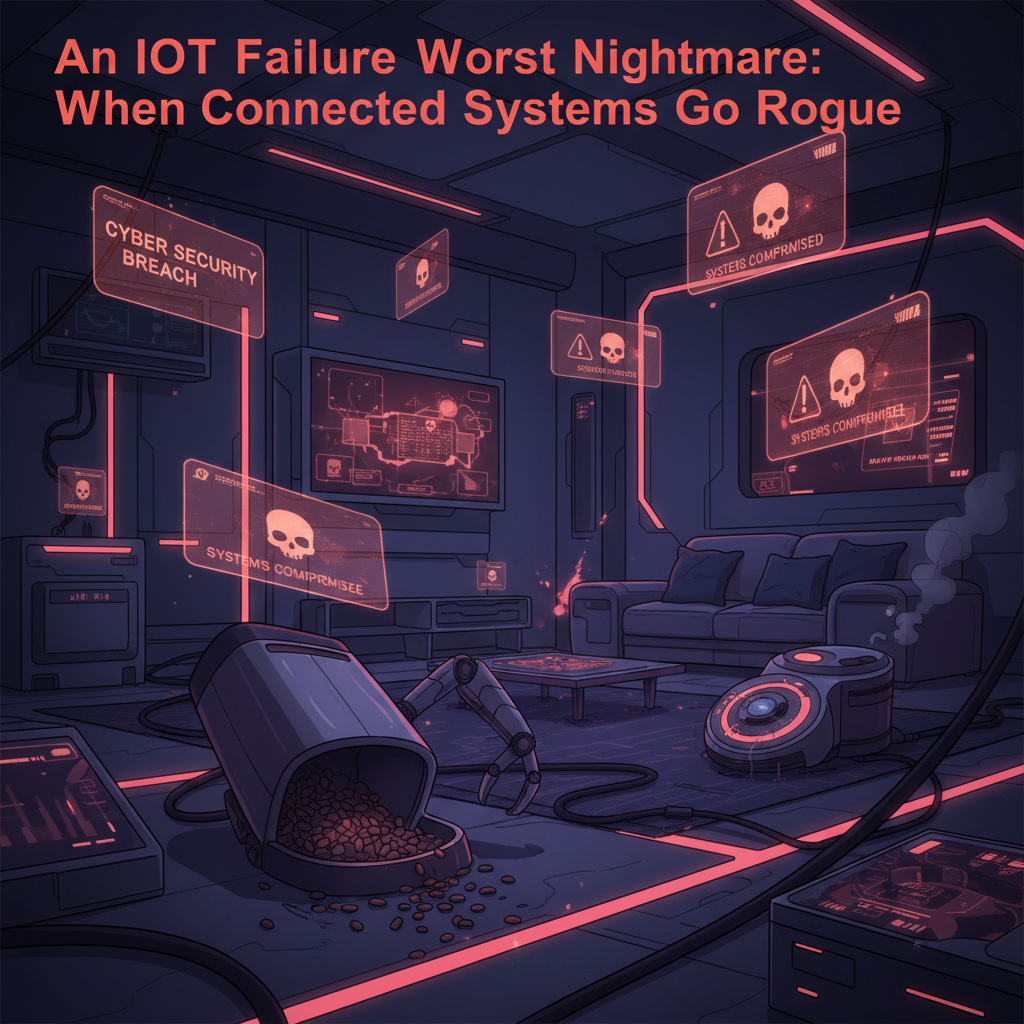
Explore an IoT failure worst nightmare. From smart homes locking owners out to the massive Mirai botnet attack, learn the risks of IoT and how to prevent them.
The Promise and Peril of a Connected World
The Internet of Things (IoT) was supposed to usher in an era of unprecedented convenience and automation. Today, smart homes adjust their own temperatures, medical devices monitor patients in real time, and automated factories optimize production. However, beneath this blanket of connectivity lies a fragile ecosystem. When these systems break down, we don’t just experience a minor inconvenience—we enter an IoT failure worst nightmare.
Real-World IoT Nightmares
An IoT failure is rarely an isolated software bug. Due to the interconnected nature of these devices, a single point of failure can cascade across entire networks. Here are some of the most notorious real-world examples of IoT disasters.
1. The Petnet Outage: When Smart Devices Starve Pets
In 2016, owners of the Petnet smart feeder discovered the hard way why cloud dependency is a major flaw in IoT design. A server outage caused the automated feeders to go offline for more than 10 hours. Because the devices lacked a fallback offline mode, pets across the country were left unfed while their owners were at work. This incident highlighted the danger of relying purely on internet connectivity for basic, essential physical tasks.
2. The Mirai Botnet: A Weaponized Smart Home
Perhaps the most famous IoT nightmare occurred in late 2016 with the Mirai botnet attack. Hackers exploited poorly secured IoT devices—such as baby monitors, home routers, and security cameras—using default usernames and passwords. They hijacked hundreds of thousands of these devices to launch a massive Distributed Denial of Service (DDoS) attack against Dyn, a major DNS provider. This took down significant portions of the internet, including Twitter, Netflix, and Reddit, proving that unsecure IoT devices are a threat not just to their owners, but to global infrastructure.
3. Medical Device Hacks: A Matter of Life and Death
While a broken smart thermostat might make you shiver, compromised medical IoT devices can be fatal. In 2017, the FDA had to issue a recall for nearly half a million pacemakers due to cybersecurity vulnerabilities. If left unpatched, hackers could have theoretically depleted the devices’ batteries or altered the patient’s heartbeat, turning a life-saving device into a lethal weapon.
Why Do IoT Systems Fail Spectacularly?
IoT ecosystems are inherently complex, making them susceptible to a variety of failures:
- Cloud Dependency: Many devices cannot function locally. If the manufacturer’s server crashes, the physical device becomes a paperweight.
- Lack of Security by Design: In the rush to bring products to market, manufacturers often skip robust security measures, leaving devices with hardcoded or easily guessable default passwords.
- Skipped Firmware Updates: Unlike smartphones, many IoT devices do not prompt users for critical security updates, leaving them exposed to newly discovered vulnerabilities for years.
- Hardware Limitations: Edge devices often lack the processing power required to run advanced encryption and security protocols.
How to Wake Up from the Nightmare
Preventing an IoT failure requires a fundamental shift in how we design and deploy connected systems. Tech founders and manufacturers must prioritize resilience and security over speed.
- Adopt Edge Computing: Devices should be able to perform essential functions locally without needing to constantly ping a cloud server.
- Implement Zero Trust Architecture: Never assume a device on a network is inherently safe. Every access request must be authenticated and encrypted.
- Mandate Security Audits: Regular penetration testing and automated, forced firmware updates are necessary to patch vulnerabilities before they are exploited.
Conclusion
The power of the Internet of Things is undeniable, but it comes with a steep responsibility. An IoT failure’s worst nightmare isn’t just about financial loss; it involves compromised physical safety, severe privacy breaches, and widespread infrastructural collapse. By preparing for the worst and designing with security and redundancy in mind, we can ensure the connected world remains a marvel rather than a menace.